COBIT 5 is an IT governance framework developed by ISACA to help organizations manage and control enterprise IT more effectively. It provides a structured approach to align IT operations with business goals while managing risk and ensuring compliance. The COBIT 5 framework was first released by ISACA in April 2012 and is essential to developing, controlling, and maintaining risk and security for organizations worldwide.
IT governance frameworks are used when organizations struggle to connect IT investments with business outcomes. Instead of operating as a support function, IT becomes a strategic driver, where decisions are measured based on value, risk, and performance. By following a framework, companies can produce measurable results towards achieving their strategies and goals. A formal program also considers the stakeholders’ interests as well as the needs of staff and the processes they follow.
What is COBIT 5?
COBIT 5 is a globally recognized IT governance framework that helps organizations align IT operations with business goals while ensuring risk management, compliance, and value delivery.
It provides a structured approach for managing enterprise IT priby integrating governance and management practices into a single framework. COBIT 5 enables organizations to balance performance, risk, and resource utilization while maintaining control over IT processes.
Unlike traditional IT frameworks that focus only on service delivery or operations, COBIT 5 takes a holistic approach by connecting business objectives with IT strategy, making it essential for organizations aiming to improve governance and decision-making.
How to Select an IT Framework?
IT governance frameworks are designed to determine how your IT department is functioning overall, the key metrics management needs, and what IT is giving back to the business from its investments. Selecting an IT governance framework depends on how the organization operates and what it needs to control. COBIT is typically chosen when governance, risk, and compliance are priorities, while frameworks like ITIL are preferred for service management. In many cases, organizations combine frameworks to address both strategic and operational needs.
For example, COBIT and ITIL can be implemented together in an organization, or COBIT along with COSO (for managing information security) can be implemented along with ISO 270001. 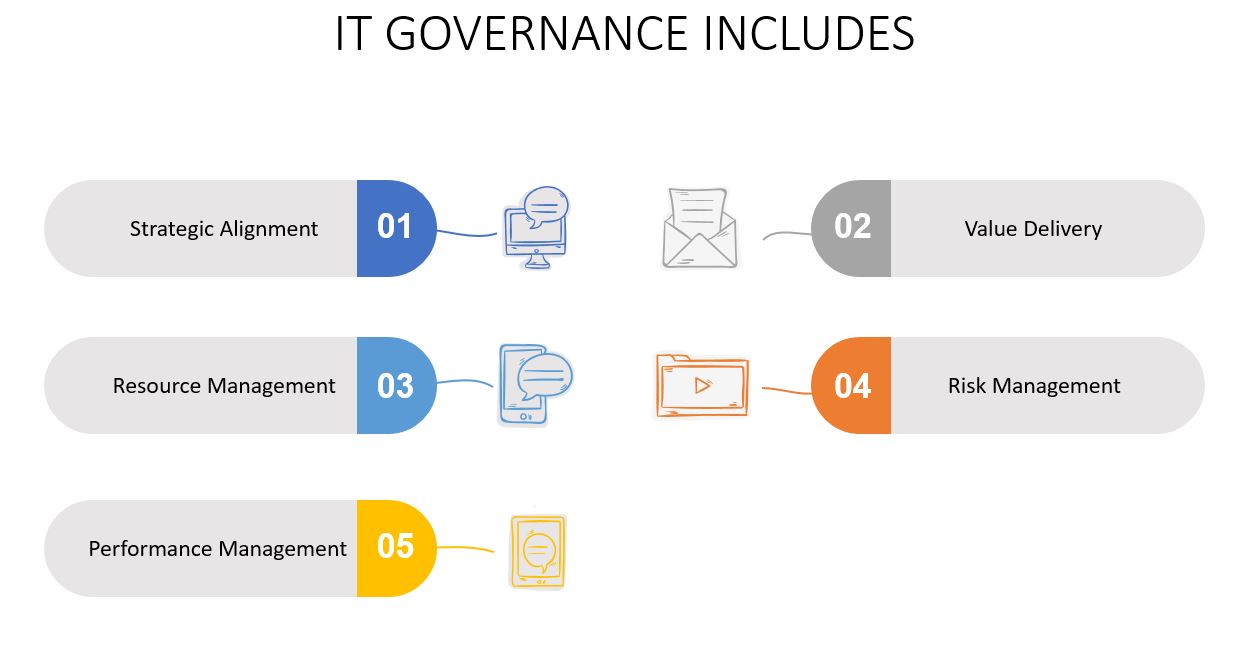
How do you ensure a Smooth COBIT 5 Implementation?
COBIT 5 implementation usually fails at the governance level, not the technical level. Securing executive buy-in requires clearly linking IT governance decisions to business risks, costs, and performance outcomes. Without that connection, the framework remains theoretical and is rarely adopted in practice. It starts with understanding the problems they see in the business and focusing your efforts on solving them. One has to speak to the high-level benefits of the framework and how it addresses those problems.
For this to happen, a risk management committee with an executive sponsor and representation from the business must be formed. One should always keep the communication lines open for various parties, measure and monitor the progress, and seek outside help if necessary.
COBIT 5 Framework
The COBIT framework diagram visually represents how governance and management processes interact to deliver value, manage risks, and optimize resources. It connects business objectives with IT goals through a structured set of processes and enablers.
| “COBIT 5 should not be viewed as a collection of isolated processes. Instead, it operates as an interconnected system where governance and management activities influence each other continuously.” |  |
A typical COBIT 5 diagram highlights:
Governance Objectives
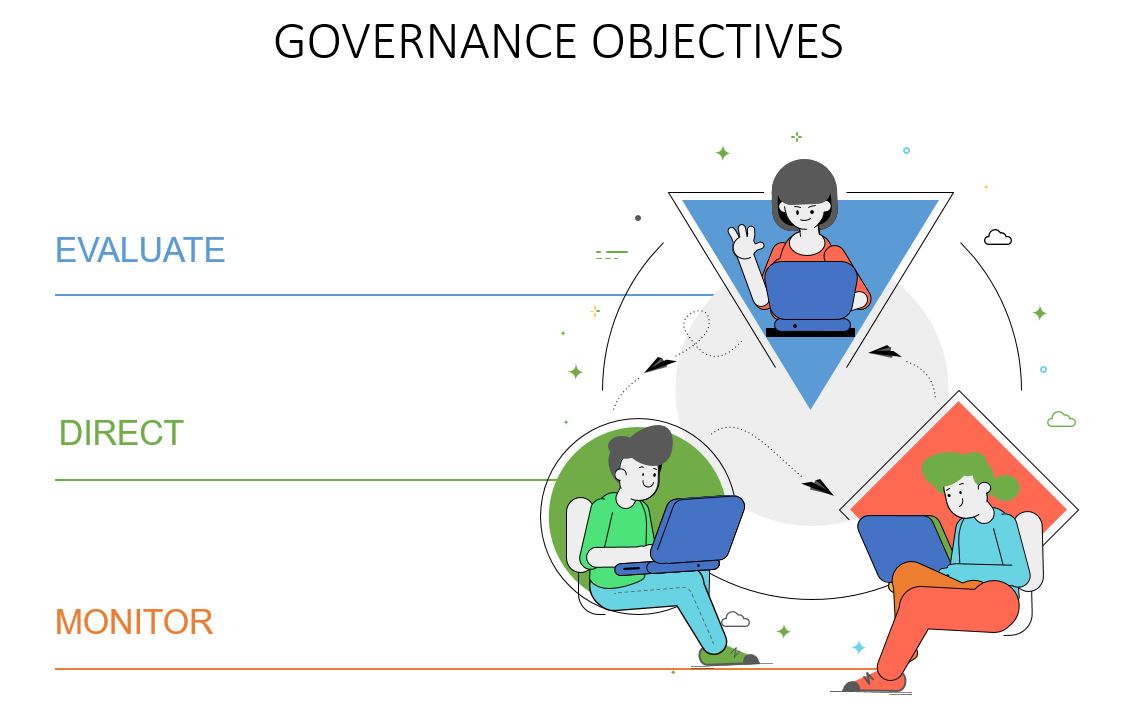
Governance objectives are Evaluate, Direct, and Monitor (EDM)
- Evaluate-It involves agreeing and identifying objectives that need to be achieved
- Direct- This includes decision-making and prioritization
- Monitor- Compliance, and performance against objectives
In short, governance objectives evaluate strategic options, direct the chosen options and monitor strategy achievement.
Management Objectives
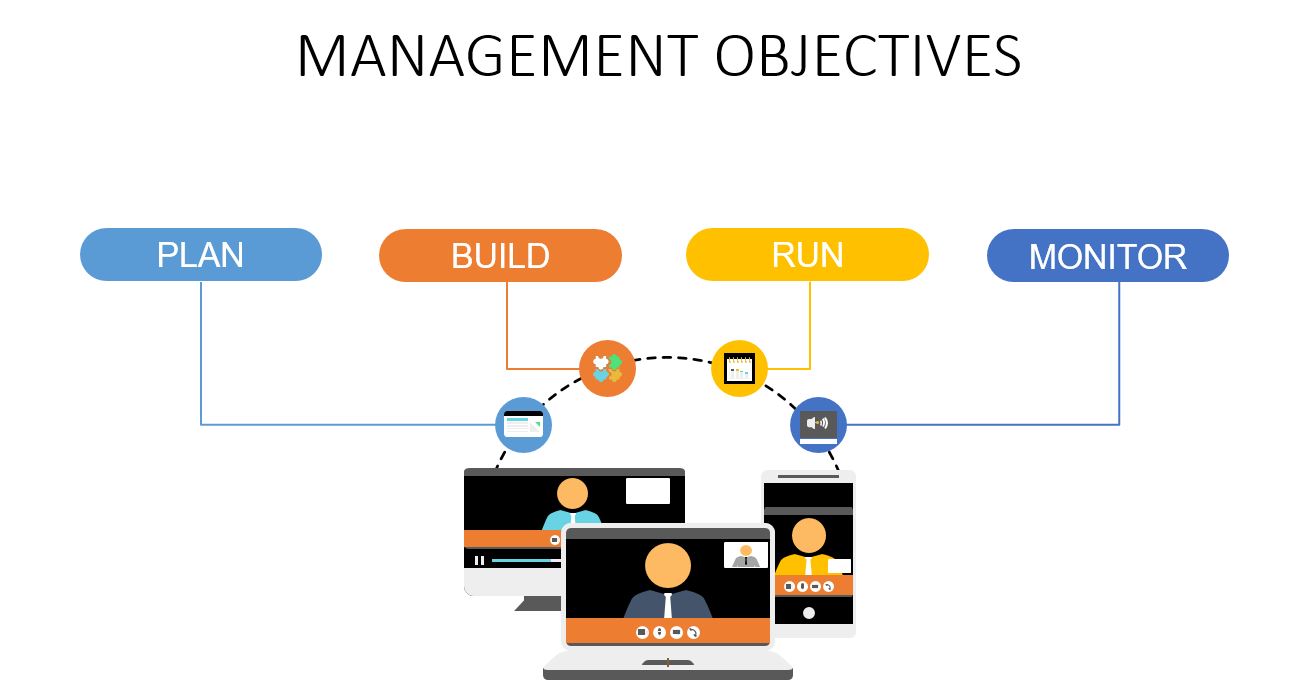 Management objectives are Plan, Build, Run, and Monitor (PBRM) The management objectives further include:
- APO (Align, Plan, and Organize) - This involves organization, strategy, and supporting activities for IT
- BAI (Build, Acquire, and Implement) - This involves the definition, acquisition, and implementation of IT solutions
- DSS (Deliver, Service, and Support) - It is the operational delivery and support of IT services
- MEA (Monitor, Evaluate and Assess) - The most important part which involves performance and conformance monitoring of IT.
In short, the management objectives are activities that are undertaken and monitored to align with the governance function's direction.
Components of the COBIT 5 Framework
Adopting the COBIT framework will help enterprises to improvise and maintain important information related to business decisions. This helps organizations realize the value of their investments in IT and achieve compliance with laws, regulations, and contractual agreements. The major components of the COBIT 5 framework are shown in the schematic below. 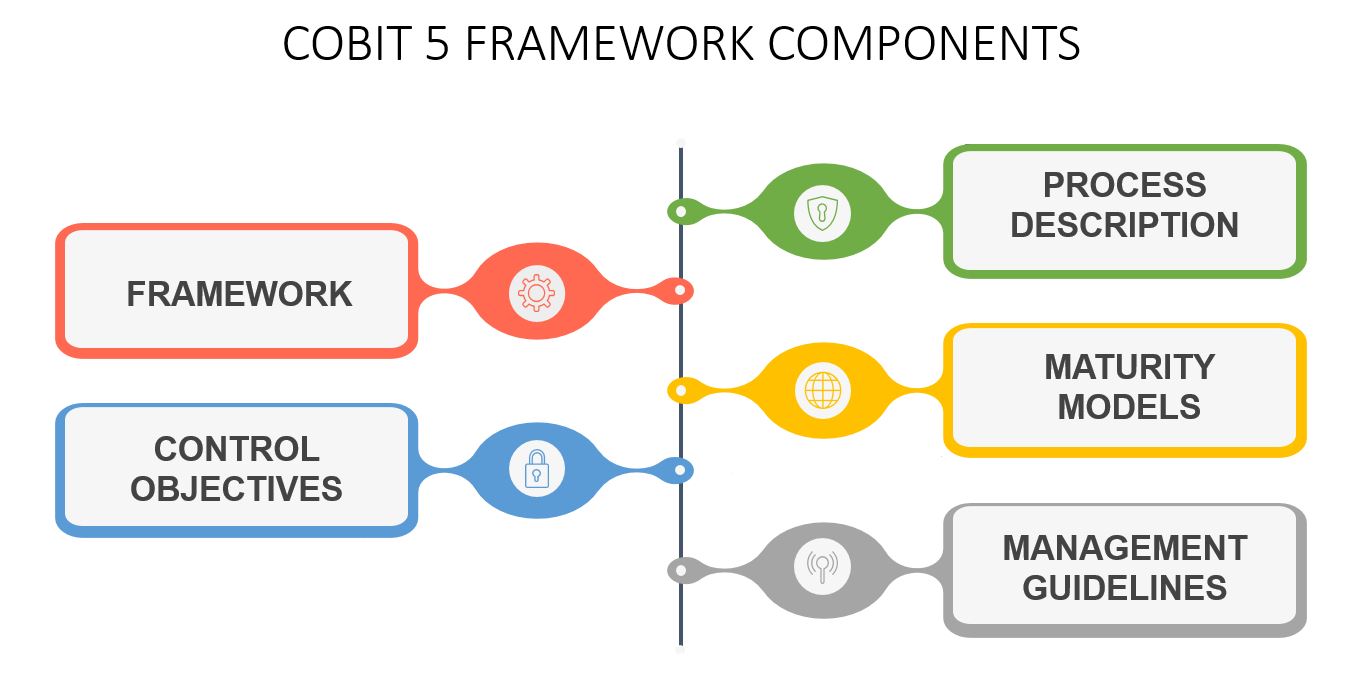 Framework – It organizes IT governance objectives and links them to business requirements by ensuring good practices of IT domains and processes are implemented simultaneously.
Process Description – A reference process model that is followed during the implementation, which is available for everyone working in the enterprise. It maps the responsibility areas of Plan, Build, Run, and Monitor (PBRM).
Control Objectives – Provide a complete set of high-level requirements to be considered by the management for effective control of each IT process.
Management Guidelines – These help to assign responsibility to agree on objectives and measure performance to illustrate the relationship between each individual process.
Maturity Models – Access maturity and capability for each process and help to address gaps in the implementation of the processes. The COBIT maturity model helps organizations assess the capability and performance of their IT processes. It provides a scale from 0 to 5, allowing businesses to identify gaps and improve governance effectiveness.
- Level 0 – Incomplete: Processes are not implemented or fail to achieve objectives
- Level 1 – Performed: Processes are executed but may be inconsistent
- Level 2 – Managed: Processes are planned, monitored, and controlled
- Level 3 – Established: Standardized processes are implemented across the organization
- Level 4 – Predictable: Processes are measured and operate within defined limits
- Level 5 – Optimizing: Continuous improvement and innovation are embedded
This model enables organizations to benchmark their current state and develop a roadmap for improving IT governance maturity.
COBIT 5 Framework Principles
Adopting the COBIT framework will help enterprises to improvise and maintain important information related to business decisions. This helps organizations realize the value of their investments in IT and achieve compliance with laws, regulations, and contractual agreements. 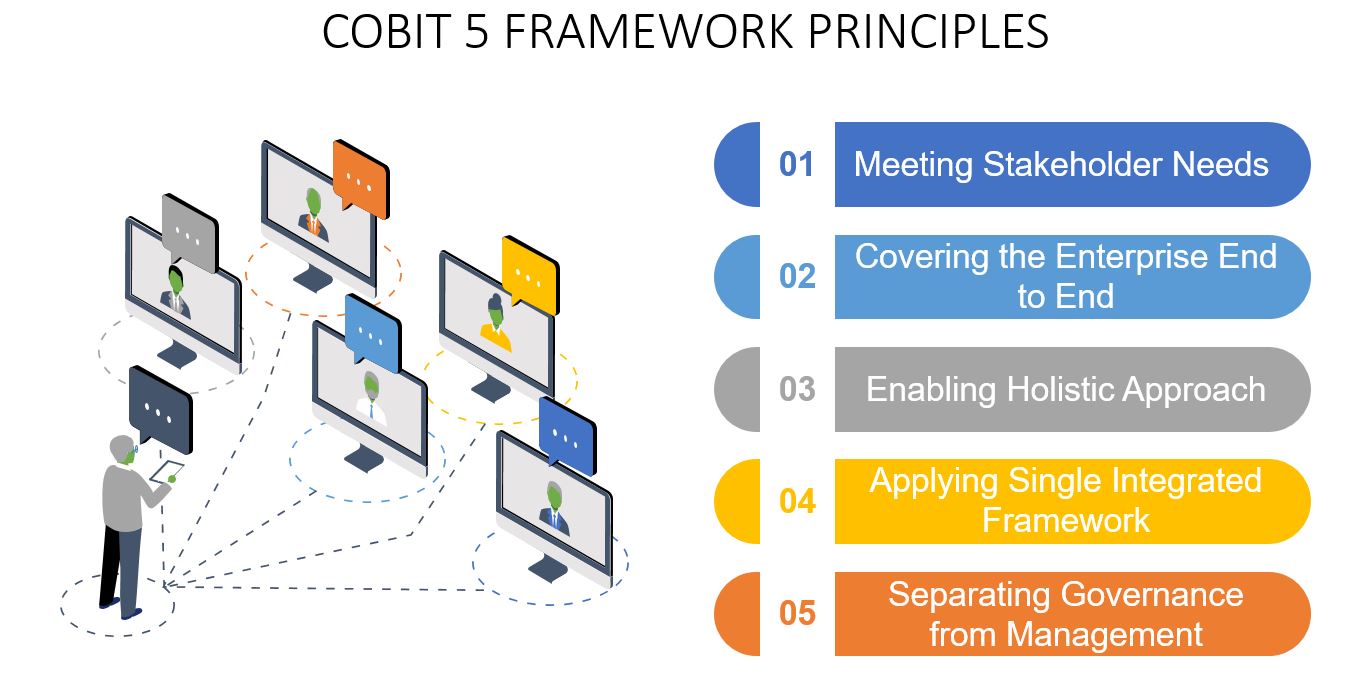 The five COBIT 5 principles are often listed as theory, but in practice, they define how organizations structure decision-making around IT. For example, “meeting stakeholder needs” is not just alignment, it forces organizations to prioritize IT investments based on measurable business value, not internal preferences.
Meeting Stakeholder Needs
It provides all required processes and other enablers to support business value creation through the use of IT. An enterprise can customize COBIT 5 framework to suit its own context through goals cascade and translate high-level enterprise goals into manageable specific IT-related goals and map these to specific processes and practices.
For example, the business's owners expect profits while government agencies expect the organization to obey the rules and pay its taxes on or before time. Each stakeholder's role in the business determines the degree to which the company attempts to take in the stakeholder in planning its actions.
Covering the Enterprise End to End
Integrate governance of enterprise IT into enterprise governance. It includes all functions and processes within the enterprise. It considers all IT-related governance and management enablers to be enterprise-wide and end to end.
For example, in the IT industry, end-to-end solutions comply with a philosophy that removes as many steps as possible, which improves the efficiency and performance of a business.
Applying a Single Integrated Framework
COBIT 5 framework is a single integrated framework and it aligns with other relevant laws and regulations standards and frameworks. This permits the enterprise to use COBIT 5 framework as the overarching governance and management framework integrator.
For example, an individual from the management may be a novice when it comes to IT technology. This single integration gives a common interface for both of them to work together
Enabling a Holistic Approach
COBIT 5 framework defines a set of enablers to support the implementations of comprehensive governance along with the management system for enterprise IT that requires a holistic approach taking into account several interacting components.
For example, enablers guide as a checklist to ensure that the directives are implemented in accordance with the framework.
Separating Governance from Management
The COBIT 5 framework makes a clear distinction between governance and management. These two encompass different types of activities. Both require different organizational structure which serves different purposes.
For example, various mnemonics such as EDM(Evaluate, Direct, and Monitor) for Governance activities and PBRM(Plan, Build, Run, and Monitor) for Management activities are used to separate both from each other.

Seven Enablers of COBIT 5 Framework
COBIT 5 framework consists of seven enablers. These enablers determine if the management and governance of enterprise IT will work. The goals cascade drives the enablers, where the IT-related goals define the objectives of each enabler. 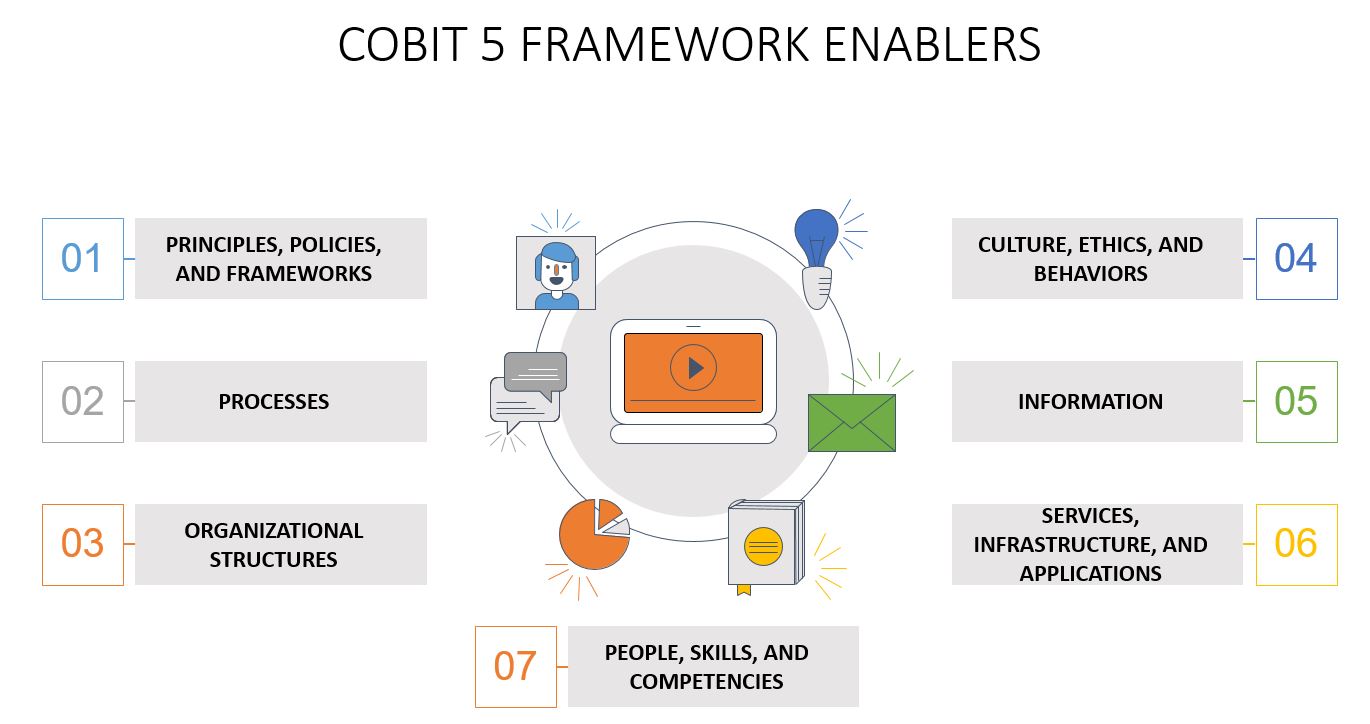 Some of these are pre-defined within the framework, while the remaining need to be designed by the organization itself based on their organizational structure, managerial context, and size of the enterprise.
1. Principles, Policies, and Frameworks: These are essential and practical guidelines that are necessary to reach the desired result within the organization for the day-to-day management
2. Processes: COBIT 5 framework describes processes as a set of practices designed to bring about a specific output in support of organizational IT targets and achieve certain objectives
3. Organizational Structures: The critical decision-making elements in an organization are the executive board or the IT Steering committee
4. Culture, Ethics, and Behaviors: Having a culture that supports the organizational goal, backed up by the right behaviors and attitudes, is a crucial factor in the implementation process of COBIT in achieving the desired outcome
5. Information: Information is essential to the organization, but having the right information to support good governance, management, and use of that information is also crucial.
6. Services, Infrastructure, and Applications: The infrastructure, technology, and applications that are needed to convey the information to the organization. These play a key role given the integration of IT and management
7. People, Skills, and Competencies: Having competent people in the right areas, making decisions, and executing processes to deliver organizational objectives and goals is the key.
| “COBIT 5 adopts a systems management perspective, ensuring that governance outcomes are achieved through the interaction of multiple organizational elements rather than isolated improvements.” |  |
Enablers are a significant part of implementing a COBIT 5 framework approach. Using the list of enablers as a checklist to ensure that they are delivered in place is vital in bringing out the most of the guidance.

KMP Provided by COBIT 5 Framework IT Compliance
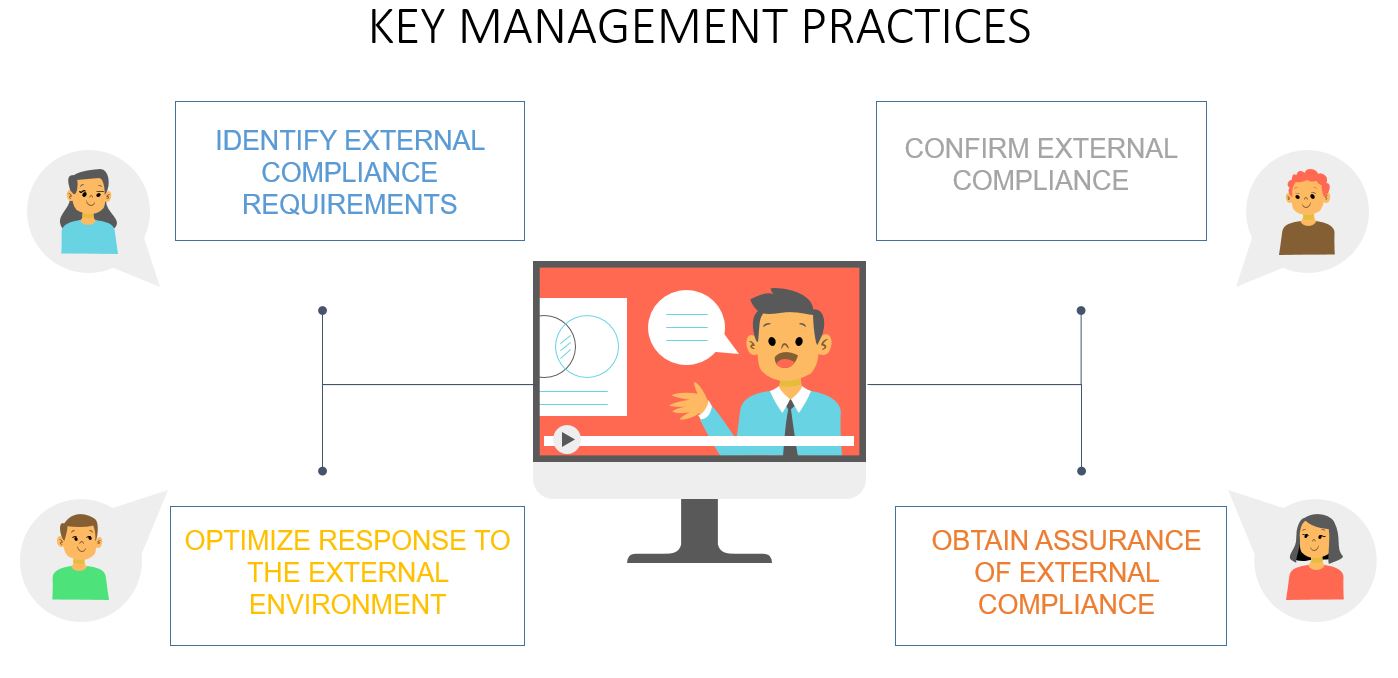 COBIT 5 framework provides Key Management Practices or KMP for ensuring IT compliance with external compliance as relevant to the enterprise. These include the following:
- Identify External Compliance Requirements: On a regular basis, diagnose and check for changes in international and local laws, regulations, and other external requirements that must be complied with from an IT perspective
- Optimize Response to the External Requirement: Here we have to analyze and adjust policies, procedures, principles, standards, and methodologies to ensure that legal, regulatory, and contractual requirements are addressed and communicated. We have to consider here the industry standards, codes of good practices, and best practice guidance for adoption and adaptation to any enterprise
- Confirm External Compliance: Here we have to confirm with policies, principles, standards, procedures, and methodologies with legal, regulatory and contractual requirements
- Obtain Assurance of External Compliance: To obtain and report assurance of compliance and adherence with policies, principles, standards, procedures, and methodologies to confirm that corrective actions to address compliance gaps are closed in a timely manner

Key Metrics for Assessing Compliance in COBIT 5 Framework
- Compliance with External Laws and Regulations: Compliance with external laws and regulations can be monitored from (a) Cost of IT non-compliance, including settlements and fines. (b)The number of IT-related non-compliance issues reported to the board or causing public comment or embarrassment. (c) The number of non-compliance issues relating to a contractual agreement with IT service providers. (d) Coverage of compliance assessments.
- IT Compliance with Internal Policies: For compliance with internal policies, we need to check (a) the number of incidents related to the non-compliance policy. (b) Percentage of stakeholders who understand policies. (c) Percentage of policies supported by effective standards and working practices. (d) Frequency of policies reviewed and updated.
Case Study
ENTSO-E was established in 2008 and given legal mandates in 2009 by the European Union’s 3rd Legislative Package for the Internal Energy Market to achieve liberalizing gas and electricity markets in the EU. This required closer cooperation among Europe’s TSOs to support the implementation of the EU energy policy. To achieve Europe’s energy and climate policy objectives, there was a dire need to implement a framework that would make this possible.
The IT director of ENTSO-E or the European Network of Transmission System Operators for Electricity decided to implement COBIT 5 framework at the organization beginning in 2014. After two years, with a successful collaboration between the internal IT department, the business organization, and the external consultants COBIT 5 framework came into action. Taking a practical approach towards implementing a program for enterprise IT governance (GEIT) based on COBIT 5, ENTSO-E focused on prioritizing the processes, developing these processes, and overcoming practical issues during the implementation of the COBIT 5 framework. There are 42 electricity transmission system operators, also called TSO's from 35 countries across Europe. 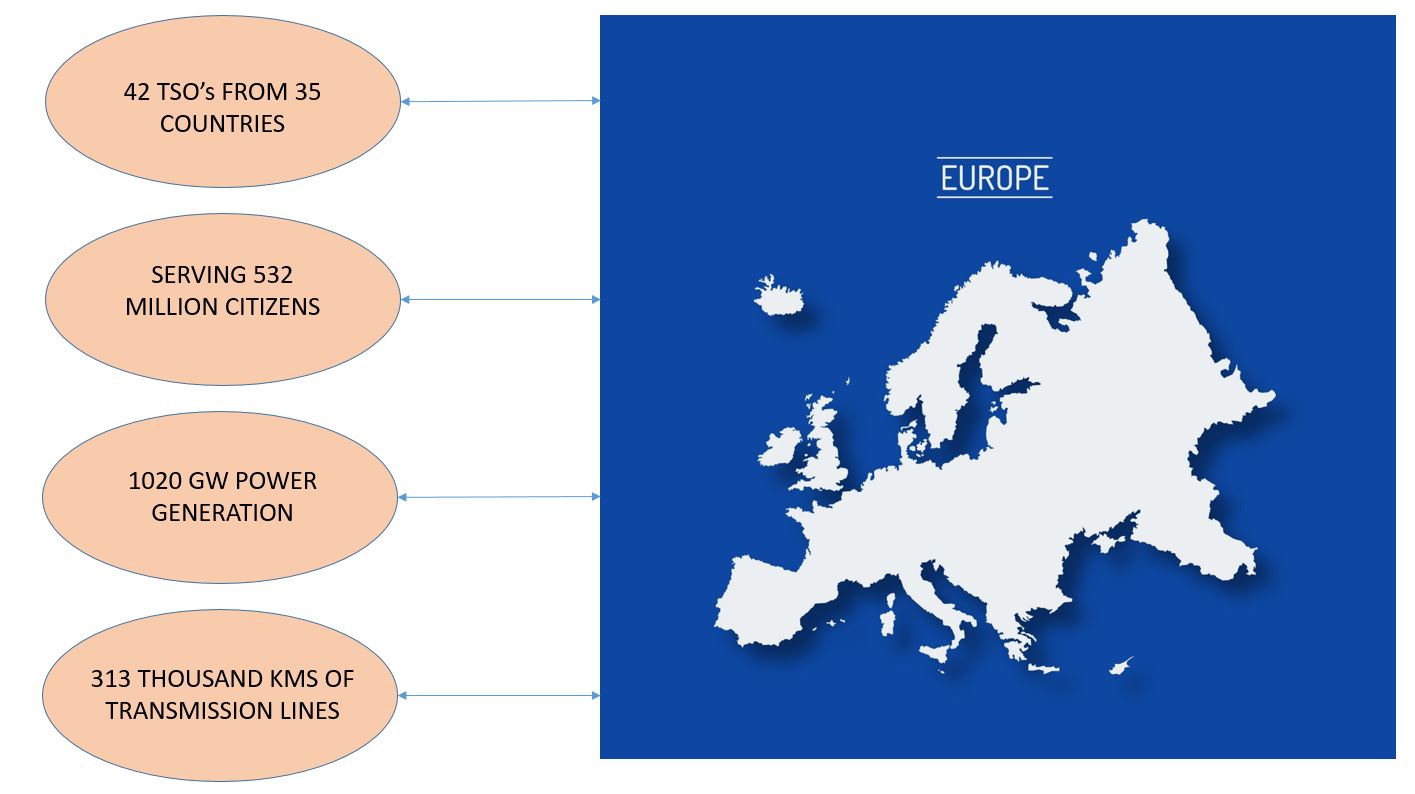 This is a six-step procedure:
- Step 1—Establish business drivers relevant to the IT processes
- Step 2—Set up the IT processes in the enterprise
- Step 3—Perform a prior selection of target processes based on the above selection
- Step 4—Confirm the prior selection of target processes with the project sponsor and key stakeholders
- Step 5—Finalize the list of processes
- Step 6—Document the scoping methodology in the IT strategy document
After implementation, the results were evaluated. This is done by going back to the original governance structure put in place. The review was completed considering all major IT suppliers:
- All data center activities moved to a single permanent supplier
- All application operations moved to two or more permanent suppliers
- Supporting the TSO members in the best possible way by the IT organization
- Maintain the size of the IT department: the number of employees, the ratio of internal versus external employees, and a revived focus on activities related to data management development
- A final review to check if the enterprise goals are being achieved. The percentage of goals achieved for each of the 37 COBIT processes was done, and another calculation was performed through the IT-related goals to arrive at the achievement of all 17 generic enterprise goals
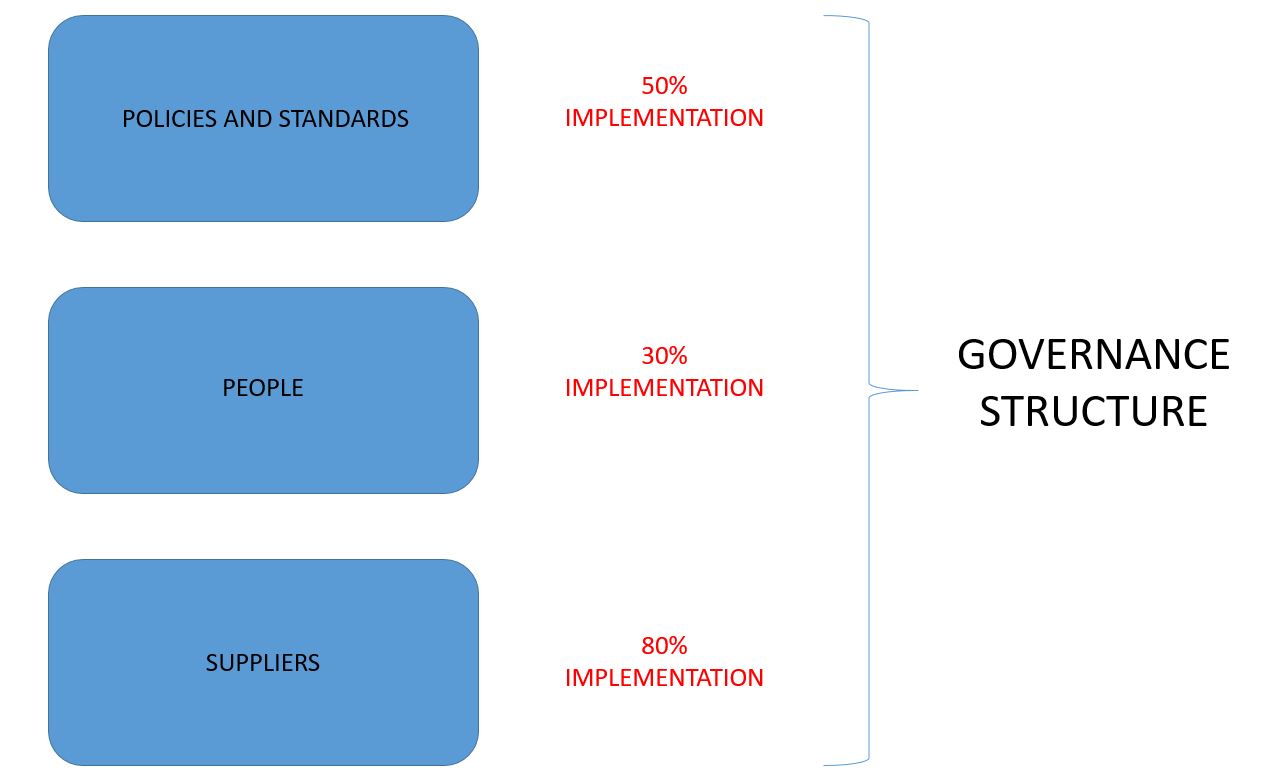 This report shows where development has been made after two years with respect to the business goals. Here the business department is quite satisfied with the overall result, as the development in the organization was startling.
Source: ISACA
Conclusion
COBIT 5 remains a valuable framework for organizations seeking stronger IT governance, better risk management, and clearer alignment between technology decisions and business objectives. While implementing COBIT 5 can be complex, its structured approach helps enterprises improve accountability, optimize resources, and create more consistent governance practices across IT functions. For organizations operating in regulated or fast-changing environments, understanding how COBIT 5 works can support better decision-making and long-term operational stability.
For professionals looking to build practical knowledge in IT governance, risk management, and service management, structured training can help bridge the gap between theory and real-world application. Invensis Learning offers related courses, such as COBIT training, to help learners strengthen their expertise in governance, compliance, service management, and information security. These programs can be useful for professionals seeking to improve their ability to manage enterprise IT.
Frequently Asked Questions
1. What is COBIT 5 used for?
COBIT 5 is used to manage and govern enterprise IT by aligning IT processes with business goals, improving risk management, and ensuring compliance. It helps organizations deliver value through structured IT governance.
2. What are the 5 principles of COBIT 5?
The five principles of COBIT 5 are meeting stakeholder needs, covering the enterprise end-to-end, applying a single integrated framework, enabling a holistic approach, and separating governance from management.
3. What is the COBIT maturity model?
The COBIT maturity model measures the capability of IT processes on a scale from 0 to 5, helping organizations assess performance and improve governance effectiveness.
4. How is COBIT 5 different from ITIL?
COBIT 5 focuses on IT governance and strategic alignment, while ITIL focuses on IT service management and operational processes. COBIT provides a higher-level governance structure.
5. What is a COBIT framework diagram?
A COBIT framework diagram visually represents governance and management processes, showing how IT aligns with business objectives through structured domains and enablers.